Which Colleges Require the SAT or ACT in 2026? The New Test-Optional Reality
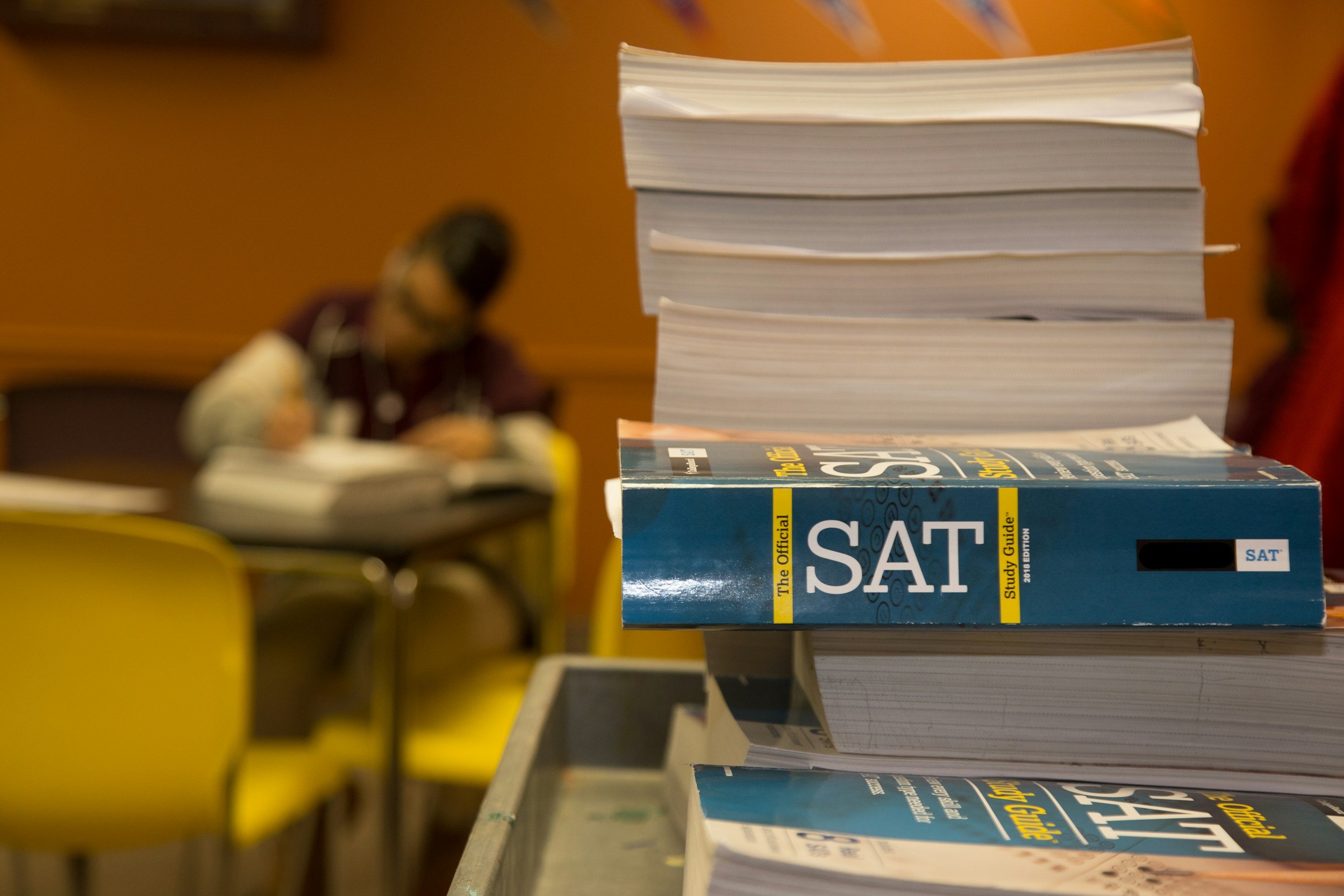
The spring of 2020 feels like it was simultaneously eons ago and just yesterday. The suspension of in-person schooling and, soon after, the cancellation of spring 2020 testing dates by the College Board and ACT would, in time, catalyze over 1,600 colleges and universities to drop their SAT/ACT requirements for applicants. Suddenly, students’ strategy around their testing plans changed drastically. While initially temporary, many institutions extended these policies multiple times, and some never brought back their testing requirements at all.
But then, in 2022, MIT became one of the earliest prominent institutions to restore required testing. Dartmouth followed in 2024, announcing that a Dartmouth faculty study had found test scores could have helped less advantaged students—including first-generation students and students from low-income families—gain access to the school, which helped lead the university to reinstate required testing. The dominoes began to fall. One by one, several Ivy Leagues reinstated their testing requirements, many reasoning that standardized test scores are better indicators of a student’s success at elite schools than high school GPA alone, which can be affected by grade inflation.
Now, in 2026, prominent institutions—including MIT, Dartmouth, Brown, Yale, Harvard, Cornell, Penn, Caltech, and more—have returned to mandatory testing. Most reinstatements require students to submit either their ACT or SAT scores, while Yale has adopted a test-flexible policy that still requires applicants to submit some form of standardized testing. Some might recall that Brown’s decision to reinstate its testing requirements caught many students off guard, as the university announced the change in March 2024, when many students had already planned to apply without scores and built their college lists around that strategy.
The New Testing Landscape at Top Colleges
Why are we rehashing this history? Because you should learn from it. Admissions policy can change faster than families expect, especially at highly selective colleges. Assuming that your top-choice school will stay test-optional simply because it is test-optional today is no longer a safe strategy.
Admissions policy is no longer moving in one clear direction. The era of assuming that selective colleges are steadily drifting toward permanent test-optional admissions is over. Families are now dealing with a more unpredictable landscape, where policies vary from school to school and can change faster than people expect.
Some colleges now require SAT or ACT scores. Others, like Yale, still require standardized testing but are more flexible about what students can submit. And while some schools do remain test-optional, recent history shows that optional policies aren’t set in stone, nor do they imply entirely neutral admissions reviews regarding students who choose not to submit scores. For students building their college lists, this distinction is a core part of application strategy.
If you assume testing will not factor into your application, you’re more likely to delay preparation, skip available test dates, or build a list that becomes harder to navigate if policies change. But planning early, and even operating under the assumption that you do need a test score to be a competitive candidate, gives you more flexibility.
Even if a score is not required at every school on your list, having one can still be useful. At many test-optional colleges, a strong score can add another piece of academic evidence to your application and help reinforce your overall profile. That does not mean every student should submit scores everywhere. But it does mean that students who never test at all may be closing off options without realizing it.
Which top colleges now require the SAT or ACT?
The Test-Optional era hasn’t ended, but it’s definitely undergoing a massive U-turn at the top of the mountain.
The following schools have officially broken up with test-optional policies and gone back to mandatory scores. If you want to wear their sweatshirt, you’ll need a score on your portal. Note that this list is not exhaustive—we’ve focused this list on the highly selective, nationally influential colleges that shape how ambitious students should think about testing strategy.
The Ivy League Returners: Harvard, Dartmouth, Brown, Cornell, and Penn have all reinstated testing in some form for the current landscape, with Harvard, Penn, and Cornell clearly requiring SAT or ACT scores for the relevant cycle. Dartmouth was one of the most consequential reversals because it did not just bring testing back quietly; it argued that test-optional admissions had made it easier to miss strong applicants, especially students from less-resourced backgrounds whose scores would have helped them in context.
The STEM Powerhouses: MIT and Caltech have been back for a while now, arguing that your math scores are the best predictor of whether you’ll survive their legendary p-sets. These schools have been especially blunt about the value of quantitative evidence in evaluating applicants for extremely demanding academic environments.
The West Coast Giant: Stanford recently joined the party, making the SAT/ACT mandatory again for all applicants. Stanford is exactly the kind of school families often use as a bellwether for broader admissions trends. Its move reinforced the idea that top-tier colleges are no longer comfortable assuming transcripts alone tell them everything they need to know.
Yale University’s Choose Your Own Adventure (Test-Flexible): Yale requires testing, but they are test-flexible. This means you can submit the SAT or ACT, OR you can swap those out for AP or IB exam scores. The important takeaway is that Yale still wants a standardized academic signal, regardless of the type of test score you submit. That alone tells you something about where selective admissions has moved.
Soft Optional: Where the SAT or ACT is Strongly Encouraged
These are a little more complicated, making them the category families misunderstand most. We think they exemplify why a school does not have to formally require scores for testing to matter.
Rice University: Rice is the clearest example. Rice is still test-optional, but it now explicitly recommends that applicants submit SAT or ACT scores if available. That is not the language of a school that sees testing as irrelevant. What they’re essentially saying is that if you have a good score, they really want to see it—but our honest interpretation? If a student has the ability to test—as in your location or socioeconomic standing does not prevent you from literally sitting for a test—choosing not to may mean voluntarily giving up a useful academic data point.
Vanderbilt University: Vanderbilt is still officially test-optional through the Fall 2027 cycle, but its own admissions data suggests that its evaluation is less neutral in practice. Data for the Class of 2030 is not yet available, but for the Class of 2029, about 43% of applicants did not submit test scores, yet only 33% of admitted students applied without them. In other words, non-submitters made up a much larger share of the applicant pool than of the admitted pool. This is fairly strong evidence, to us, that their optional stance is more similar to Rice’s than they let on. Our read: If you have access to testing and can produce a strong score, Vanderbilt is not a school where we would feel comfortable telling students to skip the SAT or ACT.
Princeton University: Enjoy the freedom while it lasts! Princeton remains test-optional for students applying this year, but they’ve already announced that the SAT/ACT will be required again starting next year (for the Fall 2028 entry class). We’re including this under our Soft Optional category because any college that’s already decided they will eventually require testing clearly values it. Especially if you know that your high school or district is known for grade inflation, we highly recommend submitting a score.
Which top colleges are still test-optional?
The following colleges have not indicated that they will reinstate testing requirements for the upcoming cycle, or for future cycles. However, keep in mind some of our previous caveats.
Columbia University: The only Ivy League school remaining that has stayed test-optional and not indicated that this will change in the near future. However, keep in mind that this isn’t a promise—they don’t need to announce that they are reviewing their testing policy for them to do so, and if they feel like it, they could announce next month that they are reinstating their testing requirements.
The UC System (UCLA, Berkeley, etc.): They are test-blind, meaning even if you send a 1600 SAT score, they won’t even look at it. They’ve moved on, and they aren’t looking back.
The Big Publics: University of Michigan and NYU remain test-optional for now, though they are reviewing data annually (so keep a close eye on them).
What We Recommend
Selective colleges have rediscovered the value of a common academic yardstick. In an era of grade inflation, transcripts are increasingly hard to compare at face value, so a strong SAT or ACT score gives admissions offices one more standardized piece of evidence.
Dartmouth explicitly concluded that testing helped it identify strong, less-resourced applicants it might otherwise miss, and Princeton’s own review found stronger academic performance among students who chose to submit scores. Even schools that remain flexible are signaling that standardized evidence still matters. The broader market is split: over 90% of four-year colleges remain test-optional or test-free overall, but many of the most prominent selective schools have moved back to required testing.
That is why our recommendation is simple: if you are aiming at selective colleges and have reasonable access to testing, plan to take at least one SAT or ACT. Even if a school on your list is still test-optional, that does not automatically mean testing is irrelevant there. A strong score may still give you another way to prove academic readiness. If you’re a student aiming for selective colleges, even at schools that remain test-optional, not submitting a score may limit you more than you realize.
Bottom Line
Even if your dream school is test-optional, aim to take the test. Too many prominent schools now require scores again for any student to safely assume testing will not matter. In the competitive 2026 market, having a strong score in your back pocket might be the difference between acceptance and rejection.
Not sure whether the SAT or ACT makes more sense for you?
We break down the differences, timing, and strategy in our earlier post on choosing between the two exams.