Chicago (And Beyond) College Tour
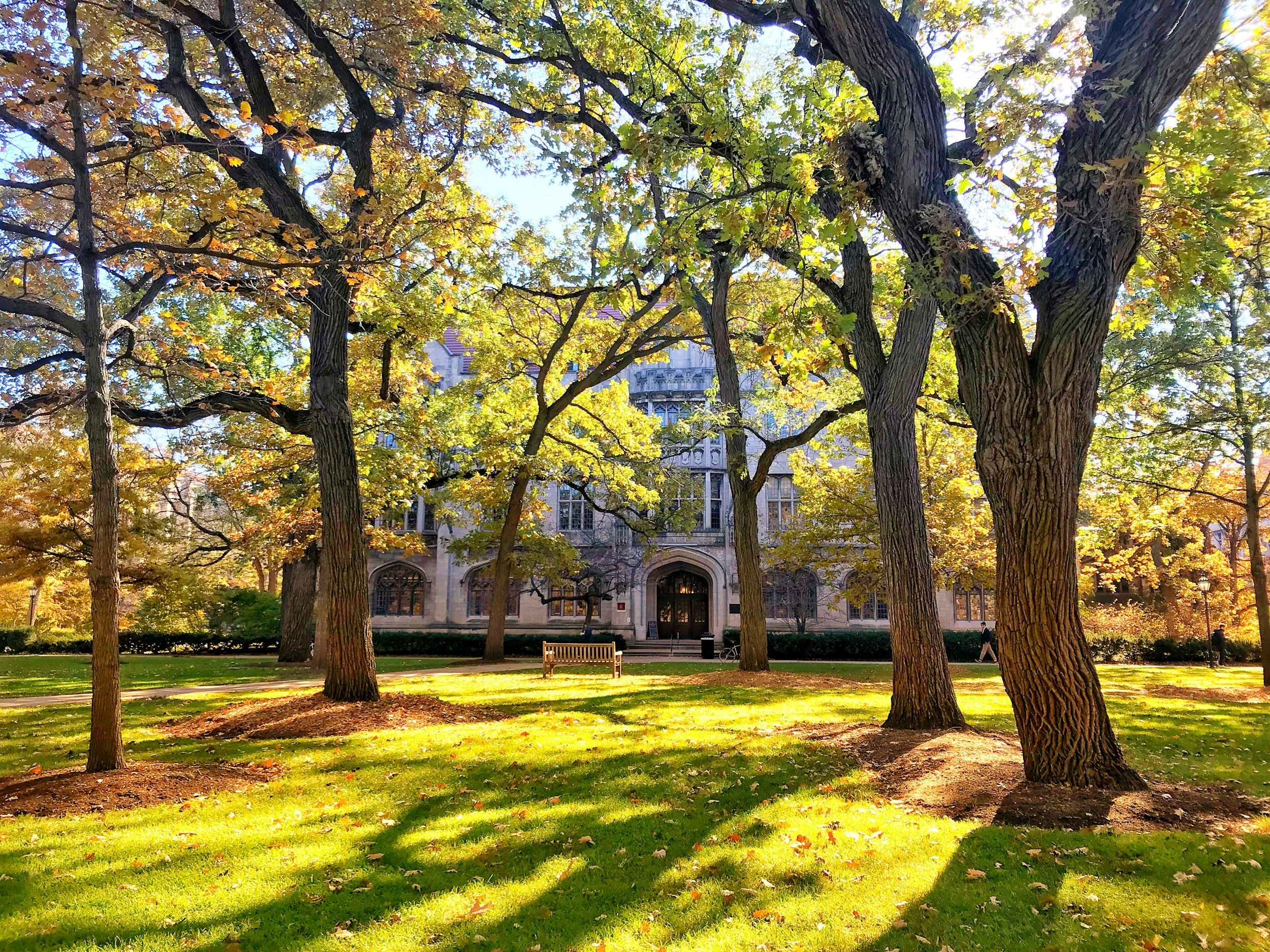
While St. Louis is the official “Gateway to the West,” the truth is that for many non-Midwesterners, Chicago is a natural first stop when it comes to planning college visits away from the coasts. Boasting 20+ post-secondary institutions serving over half a million undergraduates (yes, you read that right!), it quietly boasts the third-largest concentration of college students in the country after New York and LA, beating out quintessential Boston by over 100,000 students.
Though it might feel like leaving the comfort of coastal road trips to visit just a handful of schools isn’t worth it, we strongly recommend taking the time to check out the gems of the Midwest. From familiar top-20 favorites like Northwestern and UChicago, to niche institutes like the art-focused Columbia College of Chicago and the nation’s largest Catholic institution, DePaul, the city is filled to the brim with unique opportunties for a dynamic four year experience.
The airports servicing the Windy City are some of the busiest in the nation, which means there are and while it might be tempting to fly in and out in a few days, it’s worth your time rent a car and make a long weekend out of it.
A word of caution: if you’re used to places like Boston or New York City, Chicago is going to feel different right away. You’re not bouncing between two or three campuses in a single day. Especially if you’re visiting from another region, spend extra time really getting a sense of the new environment where you might spend your next four years: check out places like Lake Michigan, visit the cultural institutions, and yes, as stereotypical as it might seem…have a
That said, it’s one of the easiest and most worthwhile Midwest entry points. You can anchor your trip around two schools you probably already know, and then decide if you want to build it out from there.
Start with two anchors:
Northwestern University (Evanston)
Northwestern has about 8,000 undergraduates and sits directly on Lake Michigan, about 30 to 40 minutes north of downtown Chicago.
Academic life here spans multiple schools, and many students move fluidly across disciplines and locations via internships and study abroad opportunities. For example, at the Medill School of Journalism, students complete a Journalism Residency where they report in places like Chicago, Washington, D.C., or abroad as part of the program. In the School of Communication, theater students are involved in productions throughout the year while also taking coursework across other disciplines. It’s not uncommon to see students building out vibrant schedules using the quarter system that pull from more than one academic area. Students often combine interests across schools, whether that’s journalism and political science, theater and economics, or engineering and design.
If you’re there, make sure to spend time walking along the lakefill and through campus near Deering Library, then head into Evanston. Students tend to work out of places like Cupitol or Colectivo, or study in Norris University Center and the Main Library. It’s easy to picture a day here moving between classes, the lake, and town.
And make sure to check the Rock — you’ll see it on your campus tour, but if you’re not doing a formal visit, be sure not to miss it! Students repaint it constantly for events, causes, and to commemorate big campus moments. I still remember seeing it painted in memory of a student (Matthew Sunshine) years ago—it gave me such a clear sense of how caring and active the student community is.
Northwestern might be a good fit if you’re looking for:
A meaningful level of balance between academics and extracurriculars
Strong pre-professional pathways that include opportunities to explore fields outside of the classroom
A traditional campus feel with access to a major city
University of Chicago (Hyde Park)
UChicago is located in beautiful Hyde Park, about 20 minutes from downtown, where the campus is built around a series of quads connected by classrooms, libraries, and residence halls within a short walking distance of each other.
If you know anything about UChicago, you probably know that the Core Curriculum shapes much of the academic experience. Students take sequences across the humanities, social sciences, and sciences, and many of the classes are structured as small discussions built around close reading of texts.
Research is also a visible part of undergraduate life. Students can apply for programs like the Summer Research Opportunities Program, and departments across the university support students getting involved in research early on.
If you love the idea of gorgeous study spaces and being surrounded by texts for four years, you’ll love checking out UChicagos many libraries — the Regenstein Library (or ‘The Reg’ as it’s colloquially called) is one of the most consistently used spaces and home to over 4.5 million volumes. Nearby, Plein Air Café on Woodlawn is a common off-campus study spot, and Hyde Park itself has bookstores, cafés, and restaurants within walking distance that students regularly enjoy.
If you extend your visit beyond Hyde Park, neighborhoods like Wicker Park or the West Loop give a sense of how students engage with the broader city, while venues like the Chicago Theatre show what downtown adds to student life when they leave campus.
UChicago might be a good fit if you are:
Interested in discussion-based, reading-heavy classes
Motivated by academic exploration
Comfortable in an environment where academics are central to student life
If you have more time
If you have a couple of extra days, it’s worth adding one or two additional schools to get a broader sense of the region.
If you have more time:
University of Illinois Urbana-Champaign (about 2–2.5 hours from Chicago)
UIUC is defined first by scale. With more than 35,000 undergraduates, the campus operates like a self-contained academic city centered around the Main Quad and Green Street.
Green Street is where much of daily student life happens between classes. It is lined with restaurants, coffee shops, and study spaces that stay active late into the night. The university highlights a long list of campus traditions, including Quad Day, where hundreds of student organizations gather at the start of the year, and Altgeld Chimes performances that play across campus throughout the day.
Smaller rituals also shape the experience. Students stop at the Alma Mater statue before exams, pass through the Main Quad between classes, and use Grainger Library as a central academic hub well into the evening.
UIUC is a strong fit for students who want large-scale academic resources, early access to research and labs, and a campus where student organizations and school traditions operate at full volume.
Indiana University Bloomington (about 3–3.5 hours from Chicago)
Indiana University is structured around a clear connection between campus and town. The limestone buildings give the campus a consistent visual identity, and daily movement flows through Dunn Meadow, Sample Gates, and into Kirkwood Avenue.
Kirkwood is where student life concentrates outside of class. It is a short, walkable stretch filled with cafés, restaurants, and informal gathering spots that students use throughout the day. Rather than separating town and campus, Bloomington blends them into a single routine.
At Kelley School of Business, coursework is built heavily around group-based problem solving and collaborative projects. Students move through classes together in ways that reinforce teamwork as a consistent part of the academic structure.
Indiana is a good fit for students who want a traditional residential college experience where academics, social life, and town life are tightly integrated into a single walkable environment.
University of Wisconsin–Madison (about 2.5 hours from Chicago)
Wisconsin sits between Lake Mendota and Lake Monona, and that geography shapes how students use the campus on a daily basis.
The Memorial Union Terrace is one of the central gathering spaces, where students study, eat, and spend time directly on the lakefront. State Street runs from campus to the Wisconsin State Capitol and functions as an extension of student life, with cafés, bookstores, and performance venues along the route.
Campus traditions and participation are central to the experience. Large-scale student involvement in organizations, athletics, and events like football game days at Camp Randall shape how students engage with the university.
Wisconsin is great for students who want a large public university with deep traditions, strong academic flexibility, and a campus experience that extends directly into a surrounding city environment.
Carleton College (about 6 hours from Chicago, or a 1 hour flight to MSP)
Carleton is a small residential liberal arts college with about 2,000 students, and the academic structure is built around small classes, close faculty interaction, and a trimester system that allows students to take more courses across the year.
Classes are discussion-based from the beginning, with students expected to engage directly with readings and with one another. That expectation carries through the entire academic experience, where students are active participants rather than passive listeners.
Student life is largely built around campus organizations, including theater, improv, a cappella, and the student-run radio station KRLX. Friday Flowers is one of the most recognizable traditions, where students leave anonymous flowers for one another each week.
Northfield is a small town about 45 minutes from Minneapolis–Saint Paul, with a compact downtown along the Cannon River. Students regularly move between campus and town, but the academic and social center of life remains on campus.
Carleton is perfect for students who want an academically rigorous environment where discussion is constant, and where nearly all aspects of daily life remain within a close, residential campus community.
Grinnell College (about 4 hours from Chicago)
Grinnell is built around academic independence. The open curriculum allows students to design their own course of study without distribution requirements, which shapes how students move through their academic years.
Programs like Mentored Advanced Projects support early independent research and creative work, often beginning before senior year. That expectation of self-direction carries into how students engage with faculty and plan their academic path.
The campus itself is compact and fully residential, with residence halls connected by covered walkways that keep students moving through shared spaces throughout the day. Most of student life happens on campus, and much of it is student-organized.
Who is Grinnell a good fit for? Students who want maximum academic flexibility, a tightly connected residential campus, and a community where students are expected to shape much of their own academic and social experience.
Final Thoughts:
Chicago works well as a starting point because it allows you to experience multiple types of institutions within a single trip. If you take the time to move between campuses deliberately, it becomes so much easier to understand what kind of academic environment, scale, and student life actually fits what you’re looking for.